


You probably know our great Schilfwein, the Muskat Ottonel Schilfwein and the Zweigelt Schilfwein. But what exactly is a reed wine or straw wine? What makes it so special? Today we would like to take a closer look at these questions and tell you more about the history and production of reed wine.
HISTORY:
Even in ancient times, the Romans appreciated sweet wine (“passum”) made from dried grapes on straw. This wine forms the basis for all Italian sweet wines, which today are produced using the so-called “passito process”. It is believed that the technique of straw wine production was established as early as the beginning of the 19th century in Rust in Burgenland, which at that time still belonged to Hungary.
Over the years, straw wines have been pressed again and again, with the straw and reed wine production process being concentrated mainly in Burgenland, in particular in the Lake Neusiedl / Seewinkel region. In 2002, the designation “Schilfwein” was newly included in the wine law. Like the other Prädikat levels, it is a traditional, specific term.
PRODUCTION:
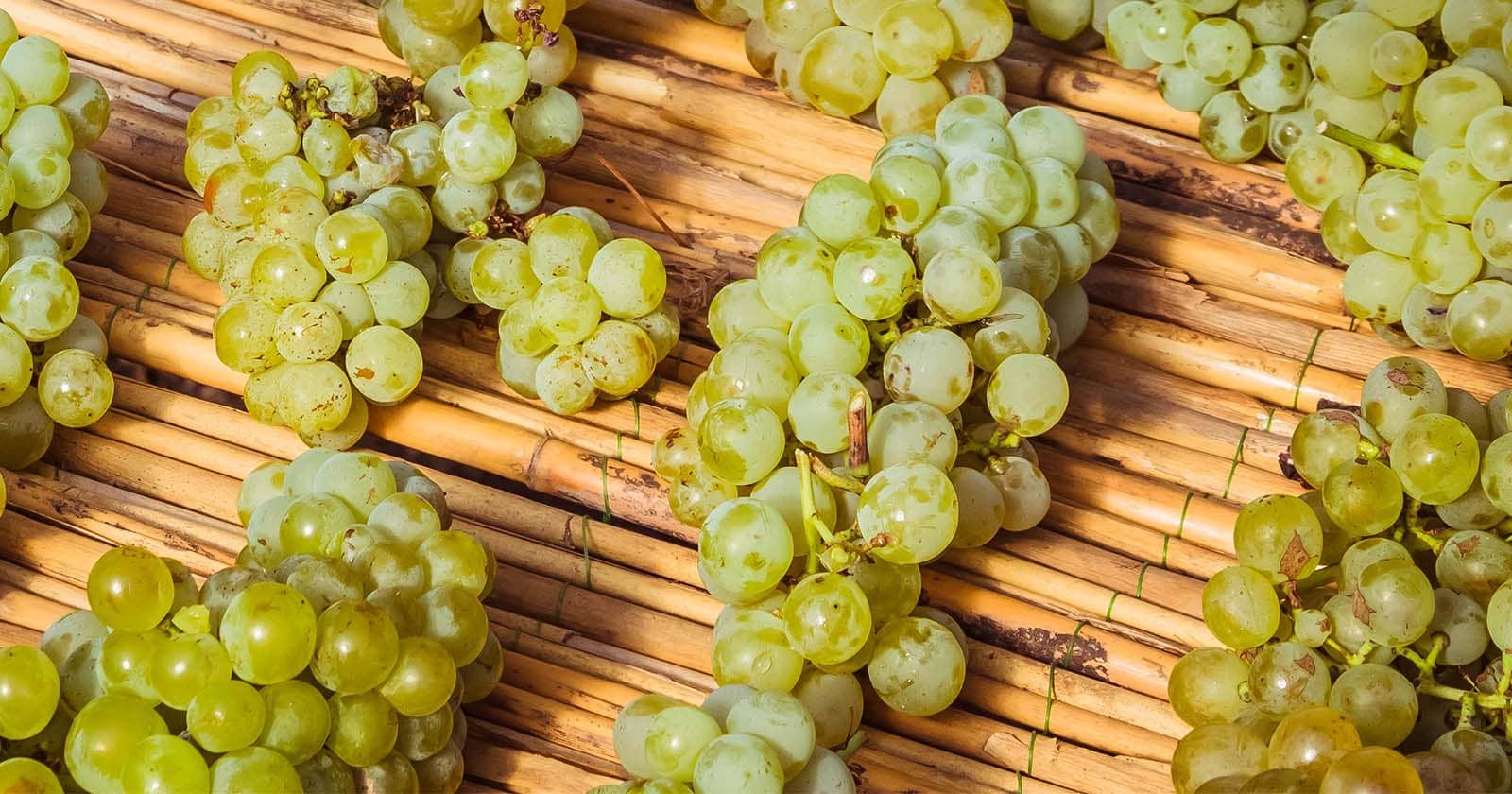
The production of reed wine is a very complex activity compared to botrytis wines. Reed wine is produced from fully ripe white or red grapes. The grapes are harvested at the beginning of September. The grapes are stored on reeds for at least 2 to 3 months before pressing. Initially, the grapes were dried in attics, but because the hygienic conditions of straw and poorly ventilated attics were not the optimal environment for the production of fine wines, the processing method was adapted and improved. The winegrowers erected foil tunnels in which wooden uprights were mounted, on which wires were stretched and covered with reed mats on which the grapes were laid out loosely and carefully. The tunnel has an opening at the front and back, and a fly screen is attached to these openings so that no insects can get into the tunnel and the air can circulate freely, allowing the grapes to dry on the air-permeable reeds. The grape juice must have a sugar concentration of at least 25° KMW after 3 months or at least 30° KMW after 2 months. Due to the natural concentration, these wines resemble a botrytis wine and convince with ripe fruit and a great balance.
FOOD RECOMMENDATION:
Exotic fruit variations, soufflé, sorbet, strong cheese and desserts.